


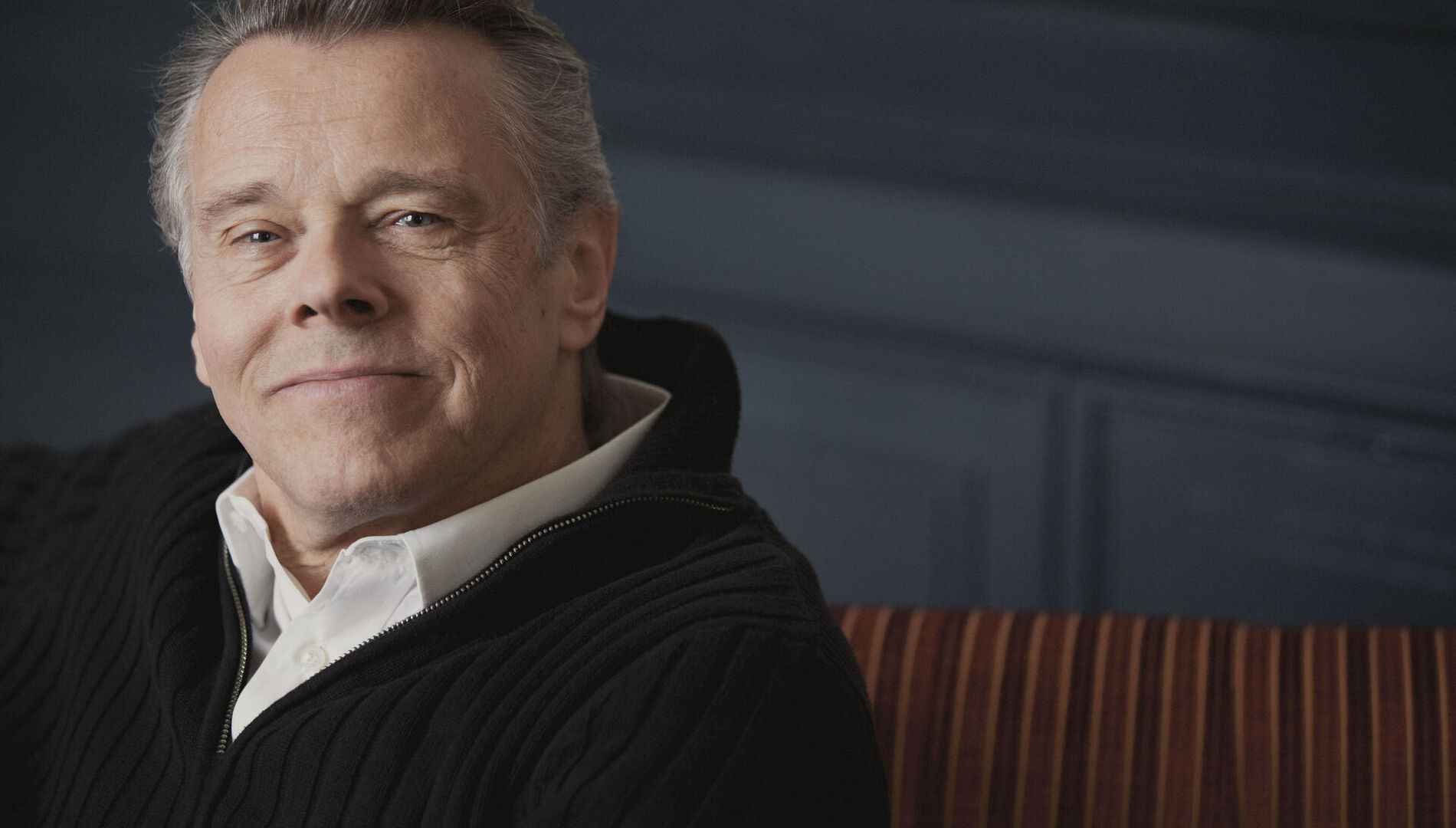
What is Mariss Jansons’s secret? How does he consistently manage to take his orchestras to a higher level and garner international recognition? In the December 2008 issue of Gramophone, he described his approach as follows: ‘It’s my task to find out the orchestra’s special qualities and preserve them. Then, if through a natural process my own individuality adds something – and theirs to me – that will be fine.’ And fine it most certainly is, a fact that became readily apparent after his appointment as chief conductor of the Royal Concertgebouw Orchestra Amsterdam back in 2004.<<cut>>
Music is in Mariss Jansons’s blood. His father was a conductor and his mother an opera singer. When Jansons was just a boy, the family moved to St Petersburg where he later studied violin and conducting. He continued his studies with Hans Swarowsky in Vienna and Herbert von Karajan in Salzburg. In 1973, Jansons was appointed Yevgeny Mravinsky’s assistant with the St Petersburg orchestra, which Jansons’s father Arvids had also conducted. From 1979 to 2000, he served as music director of the Oslo Philharmonic Orchestra, bringing it great international acclaim. On the occasion of his seventieth birthday in 2013, Jansons has been given Carte Blanche by the Concertgebouw in its World Famous Symphony Orchestras Series.
Jansons has made numerous appearances throughout the world as a guest conductor of the Berlin, the Vienna and the London Philharmonic Orchestras, as well as the leading orchestras in the United States. Jansons was appointed music director of the Pittsburgh Symphony Orchestra in 1997 (a post he held until 2004) and music director of the Bavarian Radio Symphony Orchestra in 2003. Making his first guest appearance with the Royal Concertgebouw Orchestra in 1988, he returned nearly every year thereafter and was appointed its chief conductor in 2004. He is the sixth conductor to hold the post since the orchestra was founded in 1888.
Jansons has received various distinctions for his achievements, including honorary membership of the Royal Academy of Music in London and the Gesellschaft der Musikfreunde in Vienna. He is also the recipient of the Austrian Decoration of Honour for Science and Art, and of Latvia’s highest honour, the Three-Star Order, conferred on him in 2006. In October 2011, the magazine Opernwelt named him ‘conductor of the year’ for his performances of Tchaikovsky’s Yevgeny Onegin with the RCO at De Nederlandse Opera. In November 2011, he was awarded the Bavarian Maximilian Order for Science and Art, and in December 2011, the Prix d’Amis by the Society of Friends of De Nederlandse Opera. In 2013 Mariss Jansons was awarded the Ernst von Siemens Music Prize.