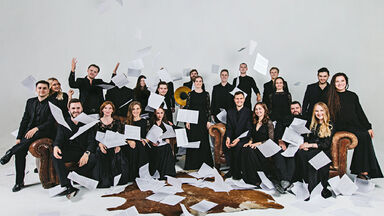


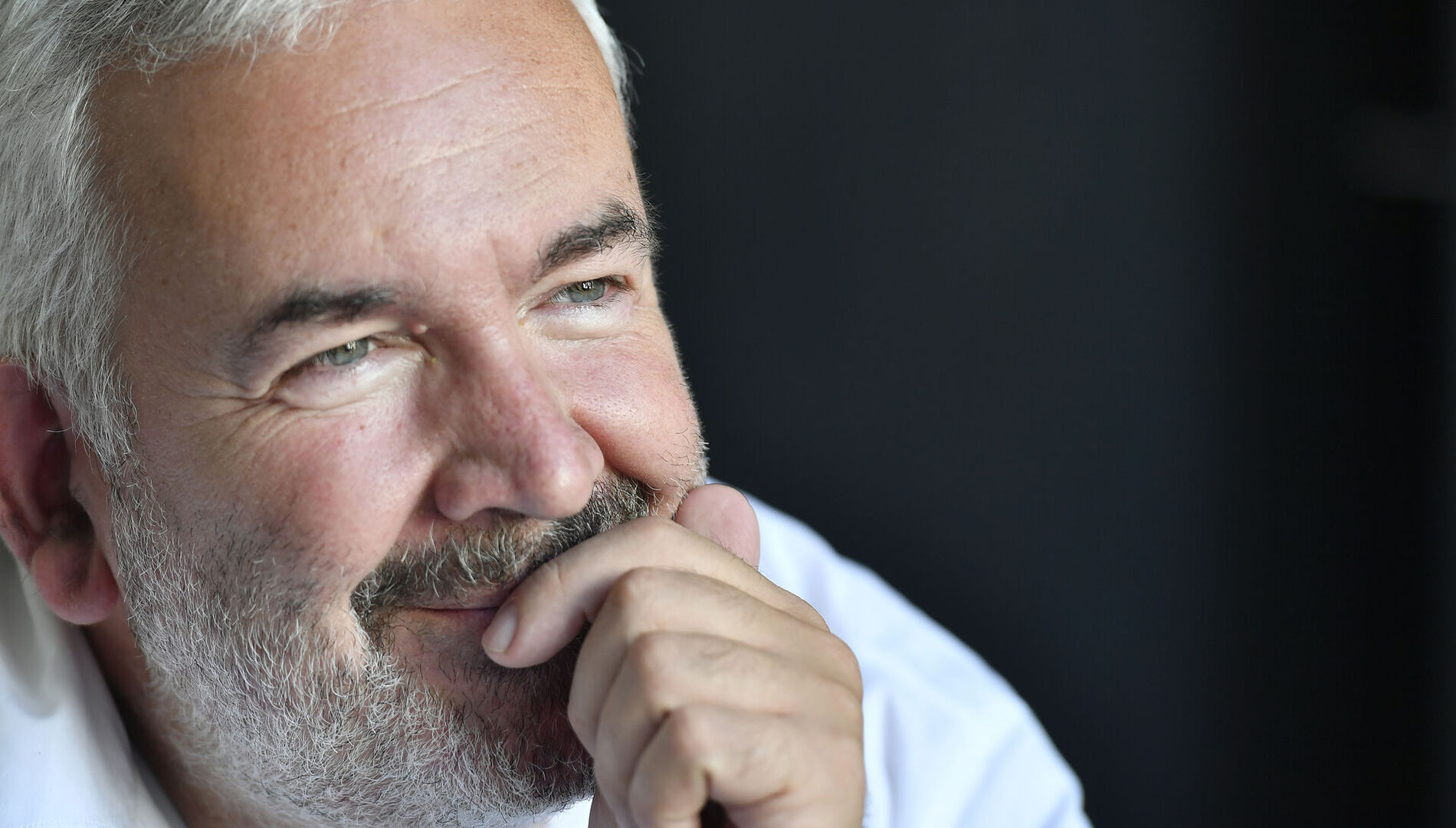
Founded in 1982 by Marc Minkowski, Les Musiciens du Louvre breathe new life into the Baroque, Classical and Romantic repertoires performed on period instruments. Over the past 30 years, they drew attention with their reinterpretations of Handel, Purcell, Rameau, Haydn, Mozart, more recently of Bach, Schubert and 19thcentury French composers.
The orchestra was originally based in Paris. From 1987 it gained an international reputation as one of the best Baroque and classical ensembles. It has also made successful forays into the works of Offenbach, Berlioz and Bizet. In 1992, it inaugurated the Baroque music festival at the Palace of Versailles with Armide by Gluck, then in 1993 took part in the inauguration of the Opéra Nouvel in Lyon with Phaëton by Lully. 1993 also saw it win a Gramophone Award for Best Baroque Vocal Recording for its recording of San Giovanni Battista by Stradella. On its move to Grenoble in 1996 it merged with the Ensemble instrumental de Grenoble. <<cut>>
In 1999, the orchestra collaborated with photographer William Klein on Messiah, a film performance of Handel's celebrated oratorio with accompanying photographs and filmed images shot or assembled by director. In 2004, on the reopening of the Maison de la Culture de Grenoble (renamed MC2) Les Musiciens du Louvre set up an 'atelier de création'. In 2005, they were the first French ensemble invited to play at the Salzburg Festival (Mitridate, re di Ponto, reprised in the Mozart complete works festival in 2006).
In 2005, Marc Minkowski decided to set up the Atelier des Musiciens du Louvre, a workshop aiming to increase partnership with regional artists and cultural figures and to increase public access to the orchestra's concerts via teaching and education projects, especially to the young.
The orchestra is also well known for its rediscovery of works by Handel (its contribution to the Handelian repertoire is recognised as one of the most important in the world), Henry Purcell and Jean-Philippe Rameau, as well as by Haydn and Mozart, to mention the most important. This path has naturally led to later and later repertoire, favouring 19th century French music. It has participated in projects around Berlioz (Symphonie Fantastique, Nuit d'été, Harold en Italie) and Jacques Offenbach in particular (La Belle Hélène, La Grande Duchesse de Gérolstein), but also around Georges Bizet (Carmen and the music from L'Arlésienne) and Gabriel Fauré (Musique de Théâtre). The 2008/09 season also saw even later composers such as Wagner, Tchaikovsky and Stravinsky.
Opera quickly took a major role in the orchestra's repertoire right from its foundation – they have won critical acclaim for their productions of Monteverdi ( The Coronation of Poppea in 2000 at the Festival d'Aix-en-Provence), Gluck (Armide in 1992), Mozart (The Magic Flute at the Ruhr Triennale, The Abduction from the Seraglio at the Festival d'Aix-en-Provence, Mitridate in 2005) but above all their productions of Iphigénie en Tauride by Gluck at the Opéra de Paris, Carmen by Bizet (2007), Die Feen by Wagner (2009) at the Théâtre du Châtelet and The Marriage of Figaro by Mozart at the Théâtre des Champs Elysées. It has also toured in Eastern Europe, Asia, North America, South America and (in 2009) to Japan. Their recent operatic successes include Le Bourgeois Gentilhomme, Hoffmann’s Tales, La Périchole, Le Nozze di Figaro, Don Giovanni, Così fan tutte.
During the season 2021/22, the orchestra travels through the Baroque repertoire and celebrate the anniversary of Molière with Lully and Le Bourgeois Gentilhomme. Marc Minkowski conducts Une nouvelle symphonie avec voix, extracts of Rameau’s operas (Grenoble, Toulouse, Moscow, Versailles) and the sixth revival of Platée in Opéra Garnier. The orchestra and its academy gives La vie Parisienne (Offenbach) in Paris, in the pit of Théâtre des Champs Elysées. The Mozart’s 3 last symphonies complete the journey (Italy, Paris) to end with 2 titles of Da Ponte/Mozart’s trilogy, Le Nozze di Figaro and Don Giovanni (Israel, Beaune).
The rich discography of the orchestra includes 2 more recordings: Mitridate, re di Ponto release in October 2021 for Warner and Une nouvelle symphonie avec voix (Rameau) in June 2022 for Château Versailles Spectacles.
Les Musiciens du Louvre receive subsides from Région Auvergne-Rhône-Alpes and French Ministry of Culture (DRAC Auvergne-Rhône-Alpes), and develop various projects to share music with all audiences in the regional territory.